
Chair Caning Repair in Maryland: When to Repair, Recaning Options & What to Expect
Chair Caning Repair in Maryland: When to Repair, Recaning Options & What to Expect
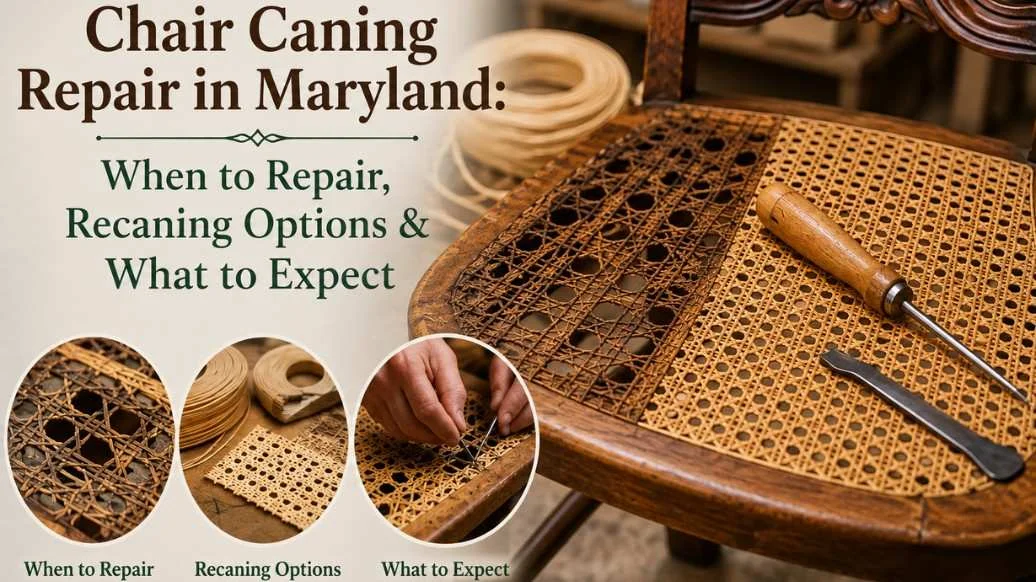
Chair caning repair is an ideal option if you are noticing that your chair is sagging or has torn over years of use. You cangofor chair caning repair in Maryland when there is minor splitting or complete breakdown of the seat mesh. Also, repairing is a much more affordable process compared to buying a new cane chair if the chair is still structurally sound. If you are wondering what the signs are that you should go for repair instead of buying a new one, options for recaning and what exactly you can expect from the whole process, read the complete blog.
What Does Cane Repair Involve
Chair caning repair in Maryland involves deciding if you would like to fix a sagging or torn seat with the hand weaving process or go for pre-woven cane webbing. The whole process involves removing the old cane, prepping the materials, installing the new cane, and finishing and curing.
Signs Your Chair Needs Caning Repair
Not every worn seat needs a full recane. Sometimes a few broken strands or a loose edge is all that’s going on. Watch for:
- Visible sagging or a seat that bows under weight
- Individual strands that are frayed, broken, or missing
- Cane pulling away from the frame or groove
- Cracking or brittleness when you press on the surface
- A seat that creaks or shifts when someone sits down
If you’re noticing any of these, it’s worth getting the chair looked at before the damage spreads further into the frame itself.
Recaning Options Worth Knowing
Not all cane is the same, and that actually matters when it comes to repair. Older furniture is usually hand caned, with individual strands woven one at a time through holes drilled around the seat frame. Newer pieces tend to use machine or prewoven cane, which is pressed into a groove and held with a spline. Mixing the two isn’t a good idea – a hand-caned chair should stay hand caned, not get patched with machine cane as a shortcut.
Beyond standard hand and machine cane, there are several traditional weaves and materials still used for chair caning repair, including:
- Porch cane and French cane
- Rush seats and ash splint
- Danish twist cord and basket weaves
- Raffia, radio net, twills, and herringbone
- Rawhide and Shaker tape
French cane is a bit different from the rest – it’s typically used on chair backs, and the strands are woven into blind holes that don’t pass all the way through, rather than an open groove.
What to Expect From the Process
A proper caning job starts with removing the old, damaged material completely before any new weaving begins. From there, the type of cane, weave pattern, and finish are matched to the original as closely as possible, so the chair looks and feels the way it was built to. Depending on the weave and the size of the seat, hand caning can take real time, since it’s done strand by strand rather than in one quick pass.
If you’ve searched chair caning repair near me and found a shop with decades of hands-on experience, that history usually shows up in the finished work – tighter weaves, better matching, and a seat that holds up for years rather than months.
Frequently Asked Questions
Q1: Can a sagging cane seat be repaired instead of replaced?
Yes, a sagging cane can almost always be rewoven rather than the chair being discarded.
Ques2: Is hand caning better than machine caning?
Neither is “better” – it depends on how the original chair was made, and mixing the two isn’t recommended.
Q3: How long does chair caning repair take?
It varies by weave and seat size, since hand caning is done one strand at a time.
Q4: Can antique cane chairs be restored?
Yes, antique pieces are commonly restored while keeping their original weave style intact.
Q5: Do all cane seats use the same material?
No, cane seats can use rush, splint, twisted cord, rawhide, or several other traditional materials.
For chair caning repair in Maryland done by hand, right in the shop, reach out to Harry C. Johnson & Son Inc. They are a renowned furniture repair shop that has been serving the Maryland, Northern Virginia and Washington, DC areas for over 100 years and are experts in repair and restoration services.