
Oil, Wax or Polyurethane: Which Finish Works Best for a Refinished Dining Room Table
Oil, Wax or Polyurethane: Which Finish Works Best for a Refinished Dining Room Table
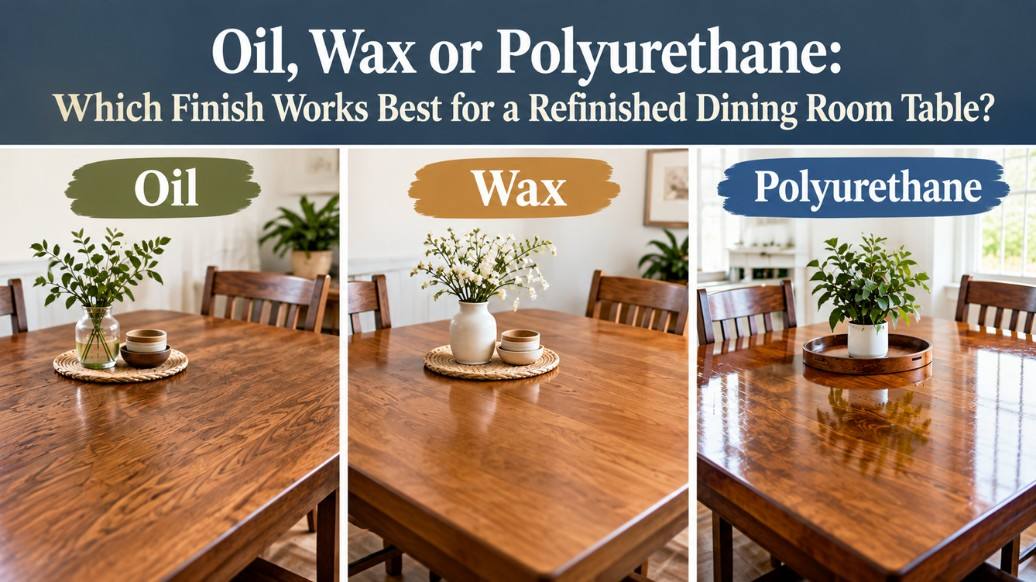
Polyurethane holds up best under daily family use, since it seals the wood rather than soaking into it. Oil and wax look better on paper – softer, more “authentic” – but neither survives a busy household the way polyurethane does. Which one is actually right for your table depends on how hard that table works.
Before picking a finish for refinished dining room tables, it’s worth knowing what each option is doing to the wood underneath, because that’s what determines how the table ages, not the sheen it has on the day it leaves the shop.
What Happens When You Use an Oil Finish?
Oil doesn’t sit on the surface – it gets absorbed into the grain. Tung oil and danish oil are the two most common choices, and both deepen the wood’s natural color over time instead of masking it with a coating. If you’ve got an older table with a lot of grain character worth showing off, this is often the finish people gravitate toward.
The catch is upkeep. Oil needs reapplying roughly every six to twelve months, and it won’t do much against a hot pan set down without a trivet or a spilled glass of wine left overnight. It’s a finish that rewards attention and punishes neglect a little more than most people expect going in.
Our team handles refinishing dining tables in Alexandria VA with this exact trade-off in mind – walking clients through whether their table’s daily use actually fits an oil finish before we recommend it.
Wax Gives That Antique Glow, But It’s High-Maintenance
There’s a reason wax is still the go-to for true antique restoration – it produces that soft, low-sheen look that photographs can’t really capture. It’s buffed on in layers, by hand, over bare wood or an existing finish, and there’s genuinely something nice about watching it come together.
It’s also the least durable of the three. Water rings appear fast, scuffs show almost immediately, and you’re re-buffing every couple of months just to keep the protection where it needs to be. Great for a display piece. Not great for a table hosting Tuesday night dinner and a stack of homework.
Anyone who’s searched refinish dining table near me after a wax finish went patchy within a year already knows this trade-off firsthand.
Why Polyurethane Wins for Most Everyday Tables
Polyurethane forms a hard protective film on top of the wood instead of soaking into it, and that’s the whole reason it outperforms oil and wax on durability. A properly done job typically runs three coats, each one lightly sanded before the next goes on, and the result can realistically last a decade or more before it needs touching up again.
What it handles better than the other two:
- Hot dishes and condensation rings, without leaving a mark right away
- Weekly wiping instead of seasonal reapplication
- Multiple sheen options – satin, semi-gloss, high-gloss – to match the room
- Daily wear from kids, pets, and general household life
The one trade-off worth mentioning: polyurethane can look slightly less “in the wood” than oil, since it’s a layer above the grain rather than part of it. Most households find that’s an easy trade for a table that doesn’t demand coasters and constant babysitting.
Figuring Out Which Finish Fits Your Table
A handful of honest questions usually settles this faster than browsing photos online:
- Does the table see meals every night, or mostly holidays?
- Would you rather maintain it seasonally or barely think about it?
- Is it an antique where preserving the wood’s original character matters more than toughness?
- Are kids, pets, or general chaos a regular part of its daily life?
Tables that work hard generally do better with polyurethane. Tables that are more heirloom than workhorse tend to age better with oil or wax. If you’re still unsure after weighing it out, this is exactly the kind of decision our dining table refinishing Alexandria VA clients bring to us before committing to a process.
The Craftsmanship Behind the Finish Matters Just as Much
None of this matters much if the application is rushed. Uneven sanding or a mismatched finish for the wood species can leave a table looking patchy within a year, no matter which product was used. Harry C. Johnson & Son Inc. has been doing this work by hand since the shop was founded in 1906, and that history is exactly why families across Gaithersburg, DC, and Northern Virginia trust us with pieces that actually mean something to them.
For refinished dining room tables Alexandria VA families bring us, the process is deliberately unhurried – every table gets stripped, sanded, and finished by hand rather than run through on a schedule. We also offer pickup and delivery, so getting a table into our workshop doesn’t have to be its own project.
If there’s a table at home overdue for its own refinished dining room tables refresh, it’s worth having that conversation before another year of daily wear makes the decision harder to reverse.
Have a table that needs new life? Reach out to Harry C. Johnson & Son Inc. and let’s talk finishes.