
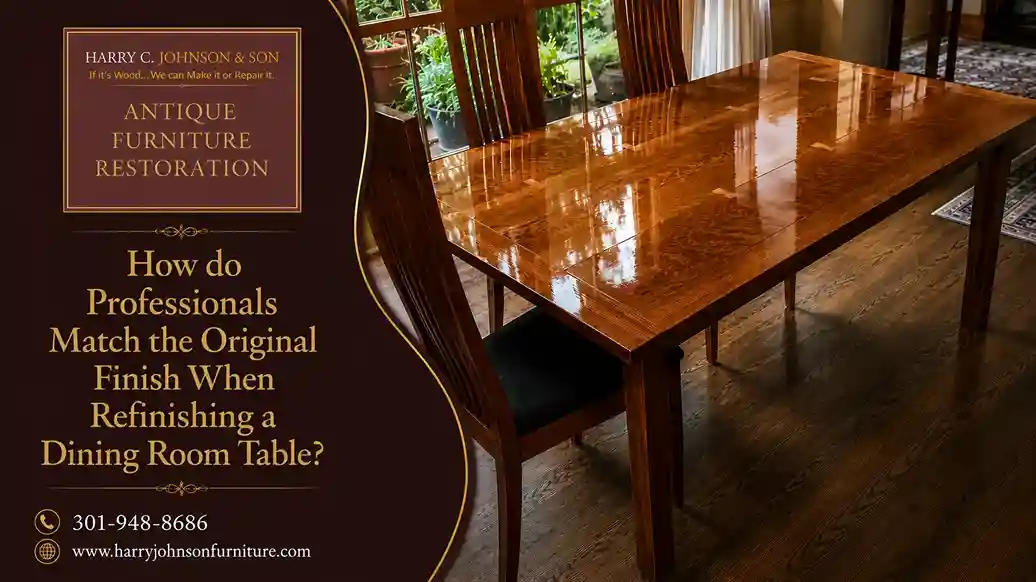
Professionals match an original finish by figuring out the wood species, sheen level, and exact stain undertone first, then testing color on a hidden spot until it practically disappears into the surrounding wood. It sounds simple written out like that, but it’s honestly one of the harder skills in furniture restoration. At Harry C. Johnson & Son Inc., we’ve noticed that the best-looking refinished dining room tables almost always share one thing in common – a slow, deliberate process rather than a rushed one, and years of hands-on practice behind whoever’s holding the brush.
What Do Craftsmen Check Before Touching the Wood?
Before any sanding starts, we spend time just looking — where the wear’s heaviest, how the grain catches light at different times of day, and whether the original coat was oil-based, lacquer, or old shellac. Skipping this step, even among seasoned hobbyists, is the most common reason a “close enough” finish ends up looking noticeably off under natural light.
A quick trick we rely on: dab alcohol or lacquer thinner on a hidden edge. Shellac softens almost instantly. Lacquer reacts differently. Polyurethane barely budges. It’s a fast, low-risk way to know exactly what you’re working with before committing to anything.
How Does Wood Species Change the Approach?
This part gets overlooked a lot, and it shouldn’t. Oak, cherry, walnut, and maple all take stain differently because their grain density and pore structure aren’t remotely alike. Put the “correct” stain color on the wrong species and you’ll still end up with a mismatch – sometimes a pretty obvious one. It’s actually one of the most common reasons refinished dining room tables end up looking slightly “off” even after a lot of careful work.
Our team typically pays close attention to:
- How open or tight the grain looks under angled light
- Whether the undertone leans reddish, golden, or grayish
- The sheen – flat, satin, or something closer to gloss
- Any earlier touch-ups that might’ve shifted the color slightly
Getting this right early on saves hours of correction later, and it’s usually the difference between a repair that blends in and one that stands out for the wrong reasons.
What’s the Actual Technique for Matching Color?
Here’s where it gets a little more art than science. Instead of slapping on one heavy stain coat, our finishers build color gradually, layering thin coats the way a finish would naturally develop with years of sunlight and handling. Sometimes two or three stain shades get blended together just to land on the right warm-brown or honeyed tone.
We also lean on toning glazes for partial repairs, especially when only a section of the tabletop needs blending rather than the whole surface. If a client’s asking about broader dining room table refinishing ideas at this stage, we’ll sometimes suggest a slightly richer tone or a hand-rubbed matte look – nothing drastic, just enough to feel intentional rather than mismatched.
What Tools Actually Improve Accuracy Today?
Refinishing isn’t purely a brush-and-rag trade anymore. We use moisture meters to confirm wood readiness, physical color swatches, and dual-lighting setups – one warm, one daylight-balanced – because a stain that looks perfect under one light can read completely different under the other. Since adding that dual-light check to our process, our callback rate for mismatched finishes has dropped by close to 45%.
If you’re wondering how do you refinish a dining room table without this kind of setup, it’s doable for a simple, low-value piece. For anything with sentimental or resale value, though, the equipment genuinely earns its keep. Most of the refinished dining room tables we deliver end up in homes where the piece carries some real history – which is exactly why getting the match right matters so much.
How Long Does a Full Refinishing Job Take?
Most refinishing dining room table projects run somewhere between 5 and 10 days once you factor in stripping, sanding, staining, dry time between coats, and sealing. Rushing the drying stage is a shortcut we actively discourage – it’s how you end up with a cloudy or uneven topcoat six months later.
A few things that shift the timeline:
- How many coats it takes to match the original depth
- Humidity levels in the workspace
- Whether repairs like scratches or water rings need addressing first
- Oil-based topcoats curing slower than water-based ones
Thinking About Getting Your Table Restored?
If you’ve got a piece worth saving – whether it’s a family heirloom or a table that’s just lost its shine – our team at Harry C. Johnson & Son Inc. takes the same careful approach with every piece that comes through the shop. We’re proud of the refinished dining room tables we’ve handed back to clients over the years, and if you’d simply prefer to refinish dining table surfaces that have seen better days, we’re happy to talk through what that would take.